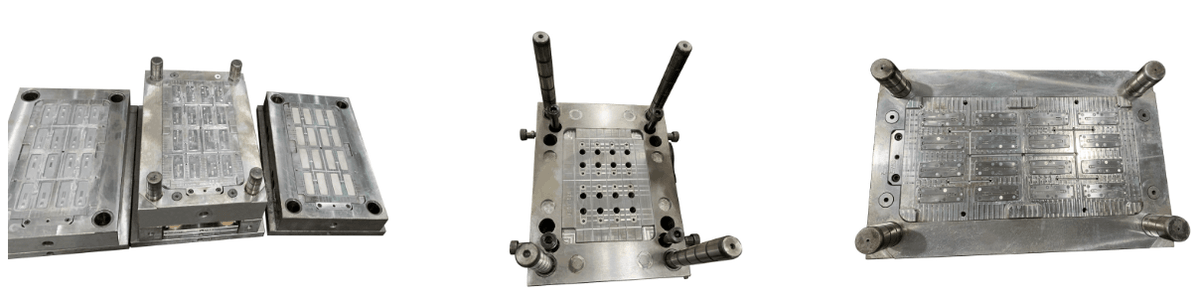

Rapid Aluminum Tooling for Faster, Lower-Cost Mold Development
Aluminum tooling is a practical solution for products with relatively simple geometry, limited parting-line variation, and applications that do not require the long service life of production steel tooling.
Key Advantages of Rapid Aluminum Tooling
1. Lower Tooling Cost
Aluminum is generally more economical than mold steel, helping reduce the initial investment for prototype and low-volume production tooling.
2. Faster Machining & Shorter Lead Time
Aluminum is easy to machine and cut, allowing the mold to be manufactured much faster than traditional steel tooling.
3. Readily Available Material
Common aluminum materials are often available from stock. In many cases, material can be ordered today and machining can begin as soon as it arrives.
4. Surface Finishing Options
Aluminum molds can be textured or polished to achieve the required surface finish on the molded parts.
5. Standard Mold Bases & Simple Inserts
By using standard mold bases together with simple, easy-to-machine inserts, we can further reduce tooling cost and shorten the overall development cycle.
When Is Aluminum Tooling a Good Choice?
Rapid aluminum tooling is especially suitable for prototype development, design verification, bridge production, and low-volume manufacturing, where fast turnaround and lower tooling investment are more important than extremely long mold life.
It provides a practical balance of cost, speed, flexibility, and part quality—helping engineers move from design to molded parts faster.
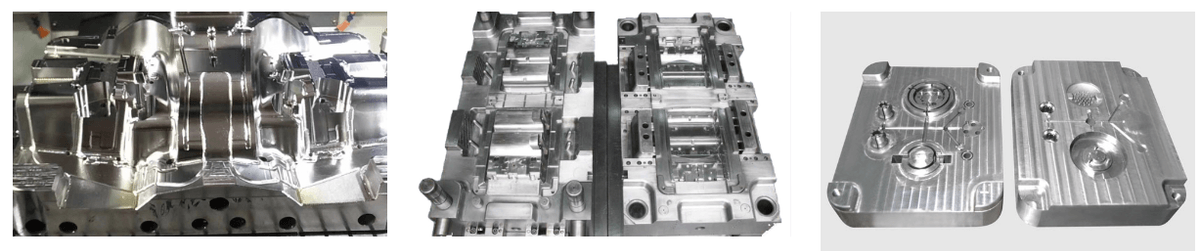
Rapid Steel Tooling for Low-Volume Production
Rapid steel tooling is an efficient solution for low-volume production when you need better durability than aluminum tooling, while still keeping tooling cost and lead time under control.
Key Advantages of Rapid Steel Tooling
1. Lower Tooling Cost
We use readily machinable soft mold steels such as S50C and P20, which can significantly reduce tooling costs compared with conventional hardened steel molds.
2. Faster Machining & Shorter Lead Time
Soft steels are easier and faster to machine, helping shorten the overall mold manufacturing cycle.
3. Greater Design Flexibility
Rapid steel tooling allows us to develop structures that may be difficult or impractical to achieve with conventional mold-making methods, providing greater flexibility for specific product requirements.
4. Texturing & Polishing Options
The mold surface can be textured or polished to achieve the required appearance and surface finish of the molded parts.
5. Standard Mold Bases & Insert-Only Manufacturing
By using standard mold bases and manufacturing only the required inserts, we can reduce tooling costs and accelerate mold development.
When Is Rapid Steel Tooling a Good Choice?
Rapid steel tooling is particularly suitable for low-volume production, bridge production, and products that require greater mold